

Interesting and timely piece. Recently I used a case study in my introduction to Public Administration class where we saw a similar case: performance measures became the goal. In the case study my students had to examine an additional perspective: the relationship between the street-level bureaucrats and management. The case was also in the healthcare policy domain and essentially pitted outsourced management and its performance requirements against the public servants’ benevolence. In the words of some of the participants interviewed: they had to “cook” the numbers in order to achieve the goals stated by management. Yet the goals (performance measures) were not aimed at providing the public good in a responsible manner. So what is a public servant to do in such case: (1) meet the goals – knowing you have done so largely unethically; (2) be ethical and risk forms of punishment.
In the upcoming semester I’ll be teaching the same course and will strive meet the “Liberal Studies For the 21st Century Competencies” of Ethically Engaged and Socially Responsible Citizens. From what I have experienced teaching the course this far it is not too difficult for students to identify, comprehend, and resolve ethical problems in a responsible manner. Of course these are students who are at least open (or outright passionate) to the values and utility of public service, but organizational (or even field culture) might be restrictive to their benevolence and desire to act in a socially responsible way.

 By Jason Bowns
Performance measurement is key in public administration. The purpose of performance measurement is to make things better and to exceed the bar, rather than merely meeting it.
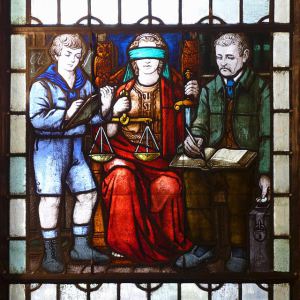 Wikimedia Commons
Yet the unfolding firestorm at the U.S. Department of Veterans Affairs (VA) illuminates a looming danger, when the numbers become more important than larger questions about integrity and adherence to a public service organization’s core mission.
Let’s recall how it began.
The world was a very different place in 1993, when performance measurement made a heavy landfall in American government, spearheaded by Vice President Al Gore. Government under newly inaugurated President Clinton dreamed big.
The Persian Gulf War had ended; NATO intervention in Bosnia had not begun; the Soviet Union had dissolved less than two years earlier, and in this pre-9/11 world, terrorism was not the global force which it has become today. Osborne and Gaebler wrote the…
View original post 689 more words
 Lachezar G. Anguelov